|
Cardioverter-Defibrillator-Universal
Remote Implanted
New device eliminates tachyarrythmias, unwanted
commercials
HOUSTON, TX--Cardiothoracic surgeons at the University
Of Texas Medical Center have successfully implanted the world's first
cardioverter-defibrillator-universal remote, announced hospital officials
during a press conference held yesterday in Houston.
The device, about the size of a deck of cards and
weighing less than 7 oz., was reportedly developed over a period of ten
years by a team headed by clinician-researcher Dr. Richard Blazell, who
also helped perform the pioneering operation last week.
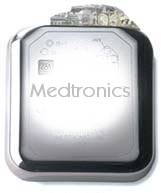 |
|
The new Medtronics ICDUR
|
Such "implantable cardioverter-defibrillator-universal
remotes (ICDURs)," in addition to monitoring the cardiac rhythm and
providing electrical shocks as necessary to terminate life-threatening
tachyarrhythmias, will also allow individuals to control a variety of
household gadgets and applicances, including televisions, VCR's, home
audio systems, and garage doors.
"Before the ICDUR, patients with a history of
potentially lethal arrhythmias needed to utilize a separate remote control
for each household device, which would lead to a glut of remotes lying
on the living room table," said Blazell. "The worst are those
times when you can't find a remote when you really need it, and then the
next day you it turns up wedged between the sofa cushions. I hate
that!"
"The ICDUR eliminates those problems, AND prevents
sudden cardiac death. [It's] the American homeowner's dream come true."
Nevertheless, ICDUR technology remains in its infancy.
The current model (Medtronics CDR5767a) requires that the wearer provide
an unobstructed path from his/her left nipple to the remote appliance,
as most appliances require infrared for such communication, a drawback
which is expected to initially limit the device's usefulness in the majority
of the known civilized world.
Medtronics officials say they are working on a workaround
to the issue.
An implantable universal remote without cardioverter-defibrillator
capabilities is expected to debut by mid-2005.
|


